Look closely at any replacement coil and you will see a number followed by “ohm” or the symbol Ω. Those vape coil ohms tell you the coil’s electrical resistance, and that one figure shapes how warm your vapour feels, how big the clouds are, how quickly your e-liquid disappears and which e-liquids suit the coil. Once you understand it, choosing a replacement coil becomes far less of a guessing game.
This guide explains what ohms actually mean, how low and high resistance coils behave, and how to match a coil to your device, your vaping style and your e-liquid.
What Does Ohm Mean on a Vape?
The ohm is the unit used to measure electrical resistance, meaning how much a material resists the flow of current. Inside every coil is a length of resistance wire wrapped around or through a cotton wick. When you fire your vape, the battery pushes current through that wire, the wire heats up, and the warmth turns the e-liquid soaked into the cotton into vapour.
The resistance of that wire decides how much current flows from a given battery voltage. A lower number means less resistance, so more current flows and the coil can take more power. A higher number means more resistance, less current and a gentler, cooler vape. The same principle applies whether your device is a simple pen, a pod kit or an adjustable mod.
How Vape Coil Ohms Affect Your Vape
Coils are usually grouped into two broad camps either side of 1.0Ω. The dividing line is not a strict rule, but it is a useful shorthand you will see on packaging and product pages.
Higher-resistance coils (1.0Ω and above)
Coils rated around 1.0Ω to 1.8Ω run at lower power. They produce a tighter, cooler draw and smaller clouds, which suits mouth-to-lung (MTL) vaping, where you draw vapour into your mouth first, much like a cigarette. They also tend to use less e-liquid and less battery. If you are unsure which inhale style suits you, our guide to direct to lung vs mouth to lung vaping covers the differences in more detail.
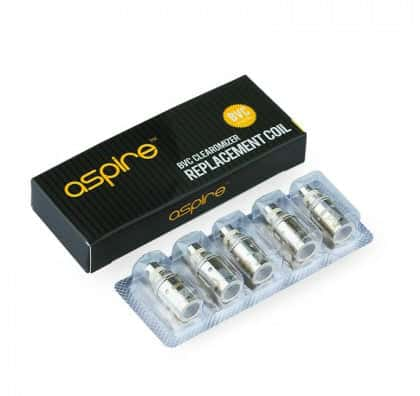
A typical example is the Aspire BVC Coils 5 Pack (1.6ohm), a high-resistance coil listed as compatible with the Aspire CE5, ET-S Glass, K1 Tank and K2.
Sub-ohm coils (below 1.0Ω)
Sub-ohm coils sit below 1.0Ω and are built to handle more power. They usually pair with wider airflow for direct-to-lung (DTL) vaping, where you breathe vapour straight into your lungs. Expect warmer vapour, bigger clouds and noticeably higher e-liquid and battery use. Many sub-ohm coils use mesh, a flat strip of wire that heats evenly across a larger surface; our comparison of mesh vs regular coils explains how that changes flavour.
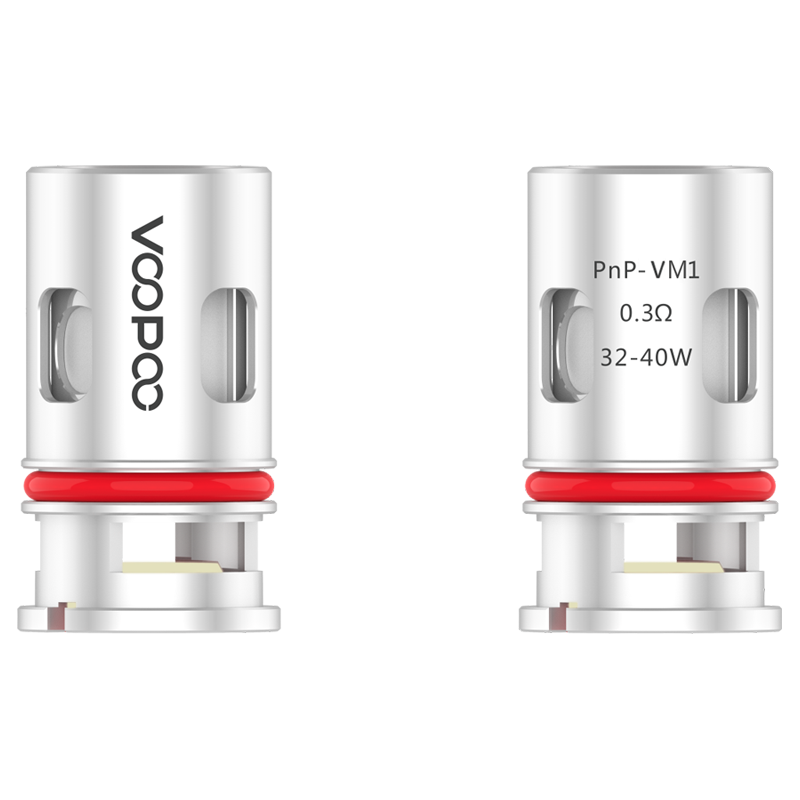
The Voopoo PnP-VM1 0.3ohm Mesh Coils are a sub-ohm mesh option sold in packs of five.
The middle ground (around 0.6Ω to 0.9Ω)
Plenty of pod kits ship with coils just under 1.0Ω. These sit between the two styles and often suit a restricted direct-to-lung draw: a little looser than MTL, without the volume of a full sub-ohm setup. The Vaporesso GTX Coils 5 Pack (0.8ohm Mesh), made for devices in the GTX range, are a good example of this middle band.
Which Coil Resistance Should You Choose?
Start with what your device supports. Most tanks and pods only accept their own coil family, so a coil must fit physically before its resistance matters. Within that family, use these rough pointers:
- Coming from cigarettes and want a similar draw: a higher-resistance coil (around 1.0Ω or above) with a tighter airflow setting.
- Using higher-strength nic salts: higher-resistance or middle-band coils at lower power are the usual match, as they use less liquid per puff.
- Want bigger clouds and use low-nicotine shortfills: sub-ohm coils with open airflow and a device that can deliver the power they need.
- Want something in between: a coil in the 0.6Ω to 0.9Ω range, often found in modern pod kits.
- Trying to make e-liquid last longer: higher resistance generally means lower power and slower liquid use.
Our full range of replacement vape coils lists the resistance in each product name, which makes it easy to compare options for your tank or pod.
Matching Ohms to Wattage and E-Liquid
Resistance and wattage work together. Most coils have a recommended wattage range printed on the coil body or the packaging, and staying inside it is the simplest way to avoid dry, burnt hits. Lower-resistance coils need more power to perform well, while higher-resistance coils can scorch the cotton if pushed too hard. On adjustable devices, start at the bottom of the recommended range and work upwards a little at a time.
E-liquid thickness matters too. Thicker, high-VG liquids flow more slowly and are generally better suited to the larger wicking holes found on many sub-ohm coils, while thinner 50/50 liquids and nic salts work well in higher-resistance coils. Whatever you choose, soak a new coil properly before the first puff; our guide on how to prime a vape coil walks you through it.
The NHS notes that adjustable vape mods with variable power are harder to use and need more maintenance than pens and pod devices, which is worth bearing in mind before moving to sub-ohm vaping.
Coil Resistance and Battery Safety
Because lower resistance draws more current, battery care matters more as you move into sub-ohm territory. Most modern devices are regulated and will refuse to fire, or show a warning, if a coil’s resistance falls outside what the device can safely handle. Never force a coil into a device it was not designed for. Cheshire Fire and Rescue Service advises that you should not mix components from different e-cigarettes, as the lithium-ion batteries inside can cause fires if not used safely.
Charging habits count as well. The London Fire Brigade recommends using only the charger supplied with your device and never leaving it charging overnight, and says to stop using any battery that gets unusually hot, bulges or hisses.
Vape Coil Ohms FAQs
Is a higher ohm coil better?
Not better, just different. Higher-resistance coils give a cooler, tighter mouth-to-lung draw and use less e-liquid; lower-resistance coils give warmer vapour and bigger clouds. The right choice depends on your device and how you like to vape.
What ohm coil is best for nic salts?
Nic salts are usually paired with higher-resistance coils or middle-band coils around 0.8Ω and above, run at lower power. Sub-ohm coils at high wattage burn through liquid quickly, which is rarely what you want with higher-strength e-liquids.
Can I use a sub-ohm coil in any vape?
No. A coil has to be made for your specific tank or pod, and your device must be able to support its resistance. Check the manual or the coil’s compatibility list before buying.
Why does my vape show a slightly different ohm reading?
Small differences between the printed figure and your device’s reading are normal, as resistance varies slightly between coils and changes as the wire heats. A reading wildly different from the label, or a “no atomiser” warning, can point to a faulty or loosely fitted coil, so reseat it or try a fresh one.
This content is intended for adults aged 18 and over. Most vapes and e-liquids contain nicotine, which is addictive.